ASUS ROG G700 (2025) Review: A Gaming Desktop for AI Work
A gaming-branded desktop with a real RTX 5070 GPU, and a memory bottleneck that limits it for serious AI work.

A gaming desktop with a genuinely useful RTX 5070 GPU for local AI work. Held back by 16GB of RAM and a Windows 11 Home license most businesses will need to upgrade.
Check price on Amazon →| Processor | Intel Core Ultra 7 265F |
|---|---|
| Graphics | NVIDIA GeForce RTX 5070 |
| Memory | 16GB DDR5 RAM |
| Storage | 1TB M.2 NVMe PCIe 4.0 SSD |
| Case | 58L dual-glass ROG chassis, supports triple-slot GPUs |
| Cooling | Quad-fan system with dust filters |
| Networking | 2.5Gbps Ethernet, Wi-Fi 6 |
| Audio | Dolby Atmos, AI noise cancellation |
| Operating system | Windows 11 Home |
| Included accessories | RGB keyboard and mouse |
| Model number | G700TF-DS774 |
The ASUS ROG G700 (2025) is a gaming desktop, not a purpose-built AI workstation. ASUS designed it for gamers, with a dual-glass case, RGB lighting, and the ROG Slash logo built in. Underneath that styling sits real hardware. It pairs an Intel Core Ultra 7 265F processor with an NVIDIA GeForce RTX 5070 graphics card.
This review looks at the G700 as a business buyer would. Can its gaming hardware do useful AI work? Where does its gaming-first design get in the way? Every spec below comes straight from the ASUS product listing, not from lab testing. It also flags what a buyer should plan to add before deployment.
What the ASUS ROG G700 Is, and Who Should Buy It
The ROG G700 is a full tower built around ASUS's Republic of Gamers design. Its 58-liter dual-glass case is meant to show off the parts inside, not to save desk space.
It suits a business that wants real GPU power for local AI inference, image generation, or light rendering work. One person running models on a dedicated desktop is a good match.
It is a poor fit for a shared office desktop. A big glass gaming tower with RGB lighting looks out of place there. It is also not the right choice for teams that need many identical, easy-to-manage machines.
A business already using on-premise AI tools could use this instead of a dedicated workstation. That only works once the RAM and Windows edition get addressed.
Businesses evaluating this machine should treat it as a specialist tool for one role. It is not a general office computer to hand out across a team.
The RTX 5070 is the reason this desktop earns a place on an AI workstation shortlist at all. Few machines at this level include a discrete GPU this capable.
- Best for: a solo AI developer or small team that needs one GPU-equipped desktop for local inference and rendering
- Also good for: light 3D work and CAD tasks that benefit from a current RTX-class GPU
- Skip it if: you need a quiet, professional-looking desktop for a shared office, or plan to run large AI models that need more than 16GB of RAM
Performance: What the Core Ultra 7 265F and RTX 5070 Handle
The Core Ultra 7 265F is a current Intel desktop processor. The F in its name means it has no integrated graphics. The system relies entirely on the RTX 5070 for any display output.
The RTX 5070 is NVIDIA's current mid-range gaming GPU. It is the part that makes this machine relevant for AI work at all.
Its CUDA cores can run local large language models and image generators through tools like Ollama or Stable Diffusion. A mini PC or laptop with integrated graphics cannot do that at any reasonable speed.
Everyday office tasks, spreadsheets, browser tabs, and video calls, run without any strain on this kind of hardware. The GPU stays available for AI or rendering work instead of being needed for the basics.
Encoding video, running local AI agents, and rendering 3D scenes all lean on the RTX 5070. The CPU plays a smaller role in those tasks. That GPU is the machine's real selling point for business use.
The Core Ultra 7 265F also handles background office software without slowing the GPU down.
Cooling, Chassis, and Room to Upgrade
Thermal design is where the G700's gaming roots pay off for a workstation buyer. Its quad-fan cooling system and dust filters keep a power-hungry GPU running under sustained, heavy loads.
That matters more for AI inference than for gaming. A long AI job can run a GPU at full load for hours. Weak cooling would throttle performance during that stretch.
The 58-liter case supports triple-slot graphics cards and gives tool-less access to the internals. A future GPU swap, if the business later needs more video memory, is realistic instead of a full rebuild.
ASUS backs the chassis with dust filters across the intake fans. That detail is aimed at keeping performance steady over years of use, not just out of the box.
A tower this size also means more fan noise than a compact office PC. That is a fair tradeoff for the cooling capacity it buys. It is worth knowing before it lands on a desk.
Good airflow also protects component lifespan under daily business use. That reliability matters when the desktop runs unattended AI jobs overnight.
The Catch: 16GB of RAM and Windows 11 Home
The G700 ships with 16GB of DDR5 RAM. That is workable for one local AI model plus normal office software. It is low for a machine marketed toward AI and gaming workloads.
Many builders treat 16GB as a starting point, not a finish line, and plan to add more. The listing does not state a maximum supported memory capacity for the G700.
The G700 also ships with Windows 11 Home, not Windows 11 Pro. Home lacks BitLocker device encryption, domain join, and Group Policy support. Many businesses rely on those features for managed hardware.
A business buyer should budget for a Windows 11 Pro upgrade, a RAM kit, or both. Do this before deploying the machine for real AI or data work.
None of these gaps are dealbreakers. They are simply extra line items a business should add to the purchase before treating the G700 as workstation-ready.
A 32GB or 64GB memory kit is a common upgrade for AI workloads. That upgrade is straightforward, given the tool-less case design.
Ports, Networking, and Everyday Fit
Networking is well ahead of a typical office desktop. The G700 includes 2.5Gbps Ethernet and Wi-Fi 6, both useful for moving large AI model files or datasets quickly.
It also includes Dolby Atmos audio and AI-assisted noise cancellation for calls, plus a bundled RGB keyboard and mouse. Those are gaming-desktop extras a business will not need. They will not get in the way of office use either.
None of these extras cost the buyer anything at setup. The included keyboard and mouse mean the G700 works right out of the box without buying peripherals separately.
Compared with a bare-bones office PC, the G700's networking and audio features are a genuine step up. That holds even for buyers who never touch the RGB lighting.
The listing also mentions versatile rear ports beyond Ethernet and Wi-Fi. That flexibility helps when connecting multiple monitors or external drives.
Where the ROG G700 Falls Short for Business
The G700's limits trace back to one fact: ASUS built it to sell to gamers, not IT departments. That shapes almost every tradeoff on this list.
None of these issues are unusual for a gaming desktop pressed into business service. They are simply costs a buyer should plan for up front, not surprises after purchase.
Most of these gaps have a fix. None of them are permanent flaws in the hardware itself.
That said, the core GPU and CPU are both current, well-supported components.
- 16GB of RAM is a low starting point for AI or data work, and will likely need a same-day upgrade
- Windows 11 Home, not Pro, so business management features are missing out of the box
- RGB lighting and a large glass case are not built for a professional office setting
- No mention of ECC memory or workstation-certified drivers, features dedicated workstation brands typically offer
ASUS ROG G700 vs the Alternatives
Against the other machines in this category, the G700 stands out. It is the only one with a current discrete GPU built in.
The nearby Dell OptiPlex and Dell Slim Desktop models are renewed office PCs. They use older Intel chips and skip a dedicated graphics card.
That makes the choice simple. Pick the G700 if the job needs real GPU power for local AI, rendering, or CAD work.
Pick a renewed Dell OptiPlex instead if the job is ordinary office computing. Cost matters more than graphics performance in that case. The full comparison list is below.
Buyers who already use NVIDIA GPUs for AI work elsewhere will find the RTX 5070 familiar. It is a compatible addition to that setup.
Neither path is wrong. The decision comes down to one thing: does the job need a dedicated GPU, or a reliable office desktop?
None of the Dell alternatives include a discrete GPU at all. That is the single biggest hardware difference across this whole lineup.
Where to buy the ASUS ROG G700 (2025) Gaming Desktop PC
A gaming desktop with a genuinely useful RTX 5070 GPU for local AI work. Held back by 16GB of RAM and a Windows 11 Home license most businesses will need to upgrade.
Check price on Amazon →Alternatives worth comparing
If the ASUS ROG G700 (2025) Gaming Desktop PC is not the right fit, these are the other ai workstations ranking alongside it right now.

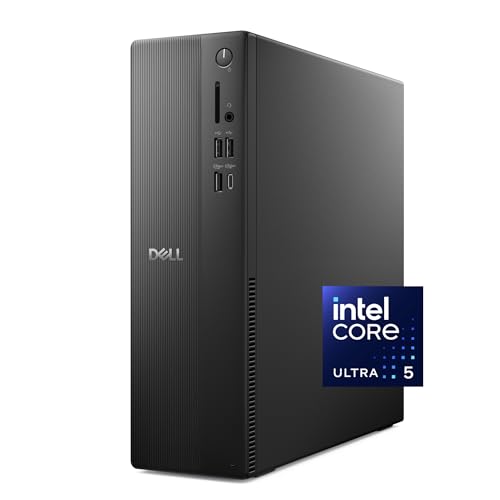

Frequently Asked Questions
- It can handle local AI work better than a typical office PC, thanks to its RTX 5070 GPU. The GPU's CUDA cores run local language models and image generators through tools like Ollama. Its 16GB of system RAM and 12GB of GPU memory limit it to smaller models, though. For light to moderate local AI use by one person, it is a genuinely useful machine.
- It ships with 16GB of DDR5 RAM. ASUS built the G700 with tool-less internal access. Opening the case and adding memory is realistic for most buyers. The listing does not state a maximum supported memory capacity. Businesses planning serious AI work should budget for a RAM upgrade before deployment. 16GB is a tight starting point.
- No, it ships with Windows 11 Home. Home lacks BitLocker device encryption, domain join, and Group Policy support. Many businesses rely on those features for managed hardware. A business buyer should budget for a Windows 11 Pro license upgrade if those features matter. This is a real added cost beyond the machine itself.
- It uses an NVIDIA GeForce RTX 5070, a current mid-range gaming GPU with 12GB of GDDR7 memory. That is enough CUDA power to run many local AI models and image generators at reasonable speed. Twelve gigabytes of video memory is modest next to dedicated workstation GPUs, though, which can offer 24GB or more. For a business running only small to mid-size models, the RTX 5070 is a real asset.
- It is a gaming PC at heart. The 58-liter glass case, RGB lighting, and included RGB keyboard and mouse were built for a gamer's desk. They were not built for a shared office. It works well on a solo AI developer's desk, where its GPU power matters more than its looks. As a standard-issue office machine handed to every employee, it is a poor fit.
Choosing an AI workstation for your business?
Layer3 Labs helps small and mid-size businesses select, configure, and deploy the right AI-ready hardware, and the workflows that run on it.
Book a free consultation