Dell OptiPlex 7050 Review: The i5-7500, 16GB Configuration
A renewed, budget business desktop with a 7th generation Core i5 and 16GB of RAM. Here is what it handles, and when the pricier sibling earns its extra cost.

A capable but aging business desktop. The Core i5-7500 and 16GB of RAM cover office work fine. Buyers who need real AI headroom should pay more for the i7-7700, 32GB sibling instead.
Check price on Amazon →| Processor | Intel Core i5-7500 (6MB cache, 3.4GHz base, up to 3.8GHz Turbo Boost) |
|---|---|
| Memory | 16GB DDR4 RAM |
| Storage | 512GB SSD |
| Graphics | Intel HD Graphics 630 (integrated) |
| Display support | Up to 4K; 2x DisplayPort 1.2, 1x HDMI 1.4 |
| USB ports | 1x USB 3.0 Type-C, 5x USB-A 3.0, 4x USB-A 2.0 |
| Wireless | Built-in Intel 7260 802.11ac Wi-Fi and Bluetooth |
| Operating system | Windows 11 Pro, 64-bit, preloaded (TPM 1.2, below Microsoft's recommended TPM 2.0) |
| Condition | Renewed, sold by a Microsoft Authorized Refurbisher |
The Dell OptiPlex 7050 is a renewed small-footprint desktop built for office work, not heavy compute. This listing pairs a 7th generation Intel Core i5-7500 with 16GB of DDR4 RAM and a 512GB SSD. It ships preloaded with Windows 11 Pro.
This review covers what this exact configuration can do, and where it falls short. It also shows how this build stacks up against the pricier OptiPlex 7050 sibling. Every spec below comes straight from the Amazon listing itself, not a lab test.
What This OptiPlex 7050 Configuration Is
This is the entry-spec version of the Dell OptiPlex 7050 line. It runs an Intel Core i5-7500, 16GB of DDR4 memory, and a 512GB SSD. Windows 11 Pro comes preloaded.
It fits businesses that need steady desktops for everyday work. Think email, spreadsheets, browser tools, and video calls. It also handles small local AI assistants without much trouble.
It is not built for heavy 3D work or large local AI models. It has no dedicated graphics card. Sustained data science work will feel slow on this hardware.
The OptiPlex line has been Dell's standard business desktop for years. It sold into offices, schools, and call centers by the pallet. That history is why renewed units are easy to find in bulk.
For many small businesses, this configuration is a reasonable first step. It replaces an aging desktop without a big up-front cost. If work demands grow later, the higher-spec sibling stays available as an upgrade path.
- Best for: reception desks, back-office roles, and standard staff desktops
- Also good for: small local AI tools like lightweight chatbots or transcription apps
- Skip it if: you need a discrete GPU for 3D rendering or larger local AI models
Performance: What the Core i5-7500 Can Handle
The Core i5-7500 is a 7th generation Intel chip. It has four cores and no hyperthreading. It runs at 3.4GHz and boosts to 3.8GHz, with 6MB of cache.
That covers office software and dozens of browser tabs without strain. Standard video calls run smoothly too. Problems start when several heavy tasks compete for cores at once.
Four cores with no hyperthreading means four threads, at most. Browsers, call software, and background updates can each claim a thread. A fully loaded desktop can feel slow before the CPU itself maxes out.
The 16GB of RAM is the more immediate limit for most office use. It handles a browser, an office suite, and a call app together just fine. A heavier mix of tabs and sync tools can push memory close to its ceiling.
Turbo Boost on this chip raises single-core speed for short bursts. That helps one demanding task, like opening a large spreadsheet. It does not help once several tasks compete for the same four cores.
What 'Renewed' Means on This Listing
This unit ships through a Renewed program. It is refurbished by a Microsoft Authorized Refurbisher. That status means the seller meets Microsoft's standards for testing and reinstalling a genuine copy of Windows.
The tradeoff for the lower price is age. This i5-7500 chip and its matching platform first shipped in 2017. The hardware is close to a decade old, even sold as new-to-you.
The listing leans into a sustainability angle. It frames refurbishment as a way to cut e-waste. That framing is accurate, but it does not change how old the parts inside actually are.
For a business, support matters more than sentiment. A renewed unit from a marketplace seller skips Dell's original warranty. Plan on the seller's own return window, and add extended coverage if you want it.
Check the specific seller's rating before buying more than one unit. That extra step matters more on a decade-old platform than on new hardware.
- TPM 1.2 only, below the TPM 2.0 that Microsoft recommends for Windows 11, a gap the listing itself flags
- Renewed condition grades vary by seller, so read the specific condition rating before buying
- No original Dell manufacturer warranty beyond whatever the individual seller offers
This i5-7500, 16GB Config vs. the i7-7700, 32GB Sibling
The same OptiPlex 7050 line also sells as a small form factor build. That version pairs an Intel Core i7-7700 with 32GB of DDR4 RAM. It is listed separately as the Dell OptiPlex 7050 SFF.
The i7-7700 adds hyperthreading on top of its four cores. That means eight threads at once, not four. Paired with double the RAM, it holds more open apps and larger local AI models.
The tradeoff is cost. This i5-7500, 16GB configuration typically sells for less on Amazon than the i7-7700, 32GB version. It uses a slower CPU and half the memory to get there.
Both configurations share the same chassis and 7th generation platform. Ports, wireless hardware, and the TPM 1.2 gap are identical between them. The difference lives entirely inside the case, in the chip and the memory sticks.
Pick this config for basic office desktops on a tight budget. Pick the i7-7700 sibling when the desktop needs to run local AI tools, or juggle many open programs at once.
A single AI chat app running in the background rarely stresses either configuration. The real gap shows up once local AI models, virtual machines, or heavy multitasking enter the picture.
Ports, Displays, and Connectivity
This OptiPlex 7050 covers the ports a small office desk actually needs. It has 2x DisplayPort 1.2 and 1x HDMI 1.4. For USB, it has one Type-C, five USB-A 3.0, and four USB-A 2.0 ports.
Built-in Intel 7260 hardware handles 802.11ac Wi-Fi and Bluetooth. It does not need a USB dongle for basic wireless connectivity. The listing also notes 4K display support through the integrated graphics.
Ten total USB ports is generous for a desktop this size. That is enough for a keyboard, mouse, webcam, and headset, with room to spare. Faster external drives belong in one of the USB 3.0 ports, not the 2.0 ones.
Two DisplayPort outputs plus HDMI cover a two- or three-monitor setup. That fits most office roles without extra adapters. Anyone needing more displays should confirm cable compatibility before buying.
None of these outputs use the newest display standards. DisplayPort 1.2 and HDMI 1.4 both sit well below current 8K options. For ordinary 4K office monitors, though, both still work fine.
Where This Configuration Falls Short
The limits here come from the platform's age and this specific low-spec build. None of them are hidden. The listing states the TPM 1.2 gap and the old chip plainly.
The biggest practical limit is RAM, not CPU. Office work rarely maxes out a four-core chip. Sixteen gigabytes fills up fast once several programs run together, and this listing shows no way to add more.
None of these issues make the machine unusable. They just narrow which jobs it suits well. Read the full spec list twice before buying if any of these limits matter for your team.
- 7th generation CPU with no hyperthreading, four threads total, which limits multitasking under heavy load
- 16GB of RAM, a workable but minimal amount for local AI tools alongside normal office apps
- Integrated HD Graphics 630 only, no dedicated GPU for 3D work or serious local AI inference
- TPM 1.2 instead of TPM 2.0, which the listing itself flags as a Windows 11 security-feature gap
- Renewed condition means variable cosmetic wear and no original manufacturer warranty
Buying and Deploying a Fleet of These
Businesses rarely buy just one desktop. If you need several desks with this same config, expect some spec variance between units. Renewed inventory comes from many source machines, not one production run.
Ask the seller about BIOS version and storage brand before ordering in bulk. That keeps your IT setup process predictable across the fleet. A consistent base image is easier to build when hardware does not vary much.
This is a 7th generation platform with TPM 1.2. Factor in that future Windows 11 support is less certain than on newer hardware. For a role you plan to staff for years, weigh that against the upfront savings.
For a single desk, none of this changes the buying decision much. For ten or twenty desks, small setup differences add up fast. Build a short intake checklist before ordering in volume.
How This Config Compares to the Other Top Sellers
Among the renewed Dell desktops selling alongside it, this i5-7500, 16GB OptiPlex 7050 sits near the bottom on specs. Most of the other OptiPlex models nearby carry newer chips and more RAM.
The Dell OptiPlex 5060 and Dell OptiPlex 3060 both step up to a newer i5-8500. The Dell OptiPlex 7060 SFF and Dell OptiPlex 7070 SFF go further still. Both carry 8th or 9th generation i7 chips and double the RAM.
This i5-7500 configuration makes the most sense as the lowest-cost entry point into the lineup. It is not the pick for demanding work.
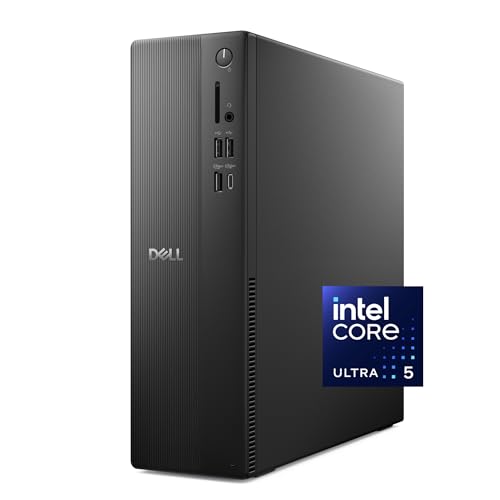
There is also a non-renewed option in this set. The Dell Slim Desktop runs an Intel Core Ultra 5-225. That current-generation chip has a built-in NPU, for buyers who want new hardware over the lowest price.
The pattern across this shelf is simple. Every newer or higher-spec alternative here costs more. Every step up in generation or RAM buys real headroom for local AI tools and multitasking.
Where to buy the Dell OptiPlex 7050 Desktop (Core i5-7500, 16GB RAM)
A capable but aging business desktop. The Core i5-7500 and 16GB of RAM cover office work fine. Buyers who need real AI headroom should pay more for the i7-7700, 32GB sibling instead.
Check price on Amazon →Alternatives worth comparing
If the Dell OptiPlex 7050 Desktop (Core i5-7500, 16GB RAM) is not the right fit, these are the other ai workstations ranking alongside it right now.


Frequently Asked Questions
- Yes, for basic office work. It handles email, spreadsheets, browser apps, and video calls without trouble. It is not built for heavy 3D work or large local AI models.
- Only small ones, and slowly. It relies on integrated Intel HD Graphics 630, with no dedicated GPU. Demanding local AI work needs a different machine, like the i7-7700, 32GB sibling.
- This configuration uses an Intel Core i5-7500 and 16GB of RAM. The i7-7700 sibling adds hyperthreading and doubles the memory to 32GB. That extra headroom usually costs more on Amazon.
- Not fully. The listing notes it has TPM 1.2, not the TPM 2.0 that Microsoft recommends for Windows 11. That can limit some newer security features and future updates.
- The unit is refurbished by a Microsoft Authorized Refurbisher, then reinstalled with a genuine copy of Windows. It is not new, so expect normal cosmetic wear and no original Dell warranty.
Choosing hardware for your AI workstation rollout?
Layer3 Labs helps small and mid-size businesses pick, standardize, and deploy the right AI-ready hardware, and the workflows that run on it.
Book a free consultation