iBUYPOWER Element Gaming PC Review: RTX 5070 AI Workstation
A gaming desktop with a genuine GPU for local AI work, if you can live with Windows Home and a 12GB VRAM ceiling.

A capable local-AI desktop wearing a gaming PC's RGB case: the RTX 5070's 12GB of VRAM does real work, just not at full workstation scale.
Check price on Amazon →| Processor | Intel Core i7-14700F |
|---|---|
| Graphics | NVIDIA GeForce RTX 5070, 12GB |
| Memory | 32GB DDR5 RGB, 4800MHz (2x16GB) |
| Storage | 1TB NVMe SSD |
| Operating System | Windows 11 Home |
| Connectivity | 6x USB 3.1, Gigabit Ethernet (10/100/1000), 802.11AC Wi-Fi |
| Case | Tempered glass, 16-color RGB lighting |
| Included accessories | iBUYPOWER gaming keyboard and mouse |
The iBUYPOWER Element is a prebuilt desktop. It pairs an Intel Core i7-14700F with an NVIDIA GeForce RTX 5070 and 12GB of VRAM. It also includes 32GB of DDR5 memory, a 1TB NVMe SSD, and Windows 11 Home.
This review is grounded entirely in the manufacturer's Amazon listing. No benchmarks were run, and no specs were assumed. It's written for a small-business owner or solo developer weighing local AI use, not an office-PC shopper.
What the IBUYPOWER Element Is, and Who Should Buy It
The iBUYPOWER Element is a prebuilt gaming desktop. It pairs an Intel Core i7-14700F with an NVIDIA GeForce RTX 5070 and 12GB of VRAM. It ships with 32GB of DDR5 memory, a 1TB NVMe SSD, and Windows 11 Home.
It suits a solo operator, developer, or small team. They get one machine for creative work and light local AI experimentation. It's a poor fit for a business that needs Windows Pro or a plain office look.
On Amazon's AI Workstations category, the Element ranks #23. That's well behind the renewed office desktops filling the top of the list. The ranking reflects traffic, not hardware quality: this is the only machine here with a real AI-capable GPU.
The listing calls this an 'AI Workstation PC ready' build. That claim holds up only in a narrow sense, since a real GPU backs it. The sections below cover exactly how far that GPU goes.
- Best for: solo builders, developers, and small teams running local AI experiments alongside everyday computing
- Also good for: video editing, 3D rendering, and CAD work that benefits from a modern GPU
- Skip it if: you need Windows 11 Pro, a plain office look, or more than 12GB of VRAM
The Core I7-14700F: Strong on Threads, Missing a Graphics Chip
The Intel Core i7-14700F has 20 cores and 28 threads. That's built for multithreaded work like compiling code, video encoding, and running several tools at once. Eight performance cores and 12 efficiency cores split up the work.
The F in its name means it has no integrated graphics. Every pixel on screen depends on the RTX 5070 next to it. For business use, that thread count helps most with parallel jobs like batch image processing or spreadsheet macros.
It won't outperform a workstation-class Xeon or Threadripper chip. Few small businesses actually need that level of hardware. For everyday office software, a browser, and an occasional local AI model, the 14700F has power to spare.
Idle power draw and noise aren't listed for this build. Full towers like this one generally cool a 20-core chip better than a mini PC could. That headroom matters when the CPU and GPU run hard together during AI workloads.
The RTX 5070'S 12GB of VRAM: The Real AI Story Here
The RTX 5070's 12GB of VRAM decides whether this works as a local AI desktop. The answer is a real but limited yes. 12GB comfortably runs quantized 7B-to-13B parameter language models through tools like Ollama or LM Studio.
It also handles image generation with tools like Stable Diffusion. That covers real small-business tasks: drafting text, summarizing documents, or running a local chatbot. None of that data has to leave the building.
Where it stops is larger models. Anything past roughly 13B parameters needs more VRAM or heavy quantization that hurts accuracy. Training or fine-tuning a model from scratch is out of reach entirely.
The RTX 5070 also uses GDDR7 memory. That's a newer, faster standard than the GDDR6 in the previous GPU generation. It helps model loading and image generation feel snappier, though 12GB is still the real limit.
Where the IBUYPOWER Element Falls Short
The biggest gap for a business buyer is the operating system. This machine ships with Windows 11 Home, not Pro. Windows Home lacks BitLocker management, domain join, and Group Policy tools that IT teams rely on.
A Pro upgrade is possible, but it adds cost and a setup step. The case is another mismatch for office use. Tempered glass and 16-color RGB lighting suit a gaming desk, not a reception counter.
1TB of storage also fills up fast once model weights and datasets enter the picture. The listing doesn't mention a second drive bay or extra M.2 slot. A business that outgrows 1TB will likely need an external drive or a full upgrade.
When we help small businesses pick AI-ready desktops, the mistake we see most is buying on GPU name alone. The listing calls this an 'AI Workstation PC.' A card's VRAM number decides that, not its marketing label.
There's no mention of liquid cooling or extra case fans in the listing. Sustained GPU-heavy AI workloads generate real heat over time. Buyers running long inference jobs should plan for good airflow regardless.
- Windows 11 Home, not Pro — no built-in domain join or Group Policy management
- 12GB of VRAM caps local AI work at mid-size quantized models
- 1TB of storage fills up quickly once model weights and datasets are involved
- RGB gaming case styling, not built for a professional office setting
32GB of DDR5 and 1TB of Storage: What It Means Day to Day
The Element ships with 32GB of DDR5 memory across two 16GB modules. That's enough headroom for dozens of browser tabs, office apps, and a local AI model running at once. DDR5 also runs faster than the DDR4 memory found in most of the Dell alternatives here.
Storage is a single 1TB NVMe SSD. That's fast for loading apps and model files, but modest in size for AI work. A single quantized 13B model alone can take up several gigabytes of that space.
Ports, Connectivity, and Everyday Fit
The Element covers basics with six USB 3.1 ports. It also has a Gigabit-capable Ethernet jack rated at 10/100/1000. That's enough for a keyboard, mouse, webcam, and external drive, plus a wired network link.
Wi-Fi comes built in through an 802.11AC adapter, commonly called Wi-Fi 5. That's fast enough for video calls and file transfers. A newer Wi-Fi 6 or 6E router won't reach full speed through it though.
Audio runs through onboard sound, not a dedicated sound card. That's standard for this price class. It's fine for calls, meetings, and general office use.
Bluetooth also isn't mentioned in the listing, unlike on several Dell alternatives here. That could matter for wireless peripherals in a business setting. A USB Bluetooth adapter is a simple, inexpensive fix if needed.
IBUYPOWER Element vs the Other Listings in AI Workstations
The iBUYPOWER Element is the only desktop here with a discrete graphics card. That's what actually enables local AI inference. The Dell Optiplex 7050 and 7060 SFF rely on 7th- and 8th-gen Intel chips with no dedicated graphics.
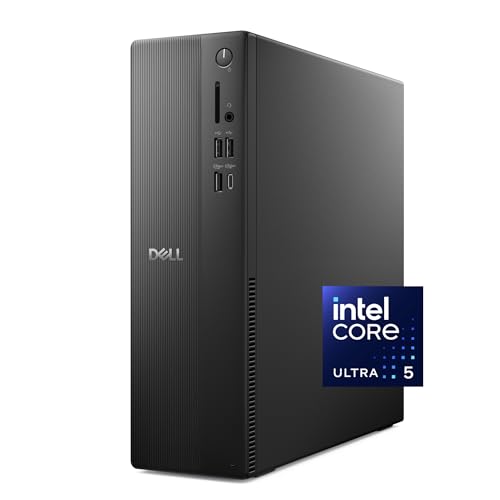
That rules out running any sizable AI model on those machines. The Dell Slim Desktop with a Core Ultra 5-225 comes closest on paper. Intel's Core Ultra chips include an NPU for light AI acceleration.
An NPU handles small tasks like webcam background blur. It can't run the 7B-to-13B parameter models a 12GB GPU handles. If local inference matters more than a quiet office box, the iBUYPOWER's GPU wins that comparison outright.
A business that only needs email, spreadsheets, and video calls doesn't need this much GPU. Any of the six Dell machines will do that job with less visual noise. A couple of them even include Windows 11 Pro already.
None of the six alternatives include a discrete GPU at all. That makes this comparison less about brand and more about mission. Pick the Dell machines for plain office duty, and this one for anything GPU-bound.
Where to buy the iBUYPOWER Element Gaming PC Desktop Computer (EBI7N5704)
A capable local-AI desktop wearing a gaming PC's RGB case: the RTX 5070's 12GB of VRAM does real work, just not at full workstation scale.
Check price on Amazon →Alternatives worth comparing
If the iBUYPOWER Element Gaming PC Desktop Computer (EBI7N5704) is not the right fit, these are the other ai workstations ranking alongside it right now.


Frequently Asked Questions
- Yes, for models that fit in 12GB of VRAM. The RTX 5070's GDDR7 memory runs quantized 7B-to-13B parameter language models well through tools like Ollama, but larger models need more VRAM than this card has.
- No. The F in its name means Intel left out integrated graphics, so every display output and every AI workload depends entirely on the RTX 5070 installed alongside it.
- It can be. Windows 11 Home lacks BitLocker device encryption management, domain join, and Group Policy tools that IT teams use to manage company machines, so a Pro upgrade may be needed.
- 12GB of GDDR7 memory. That's enough for quantized mid-size open-weight AI models, but it caps out well before the largest local language models, which need substantially more VRAM.
- It's the only desktop in this AI Workstations shelf with a discrete GPU. The Dell OptiPlex and Slim models rely on integrated graphics or, at best, an NPU, so none of them can run local AI models the way this machine can.
- It's a gaming PC sold into the workstation category. The GPU, RAM, and CPU are workstation-capable for light AI and creative work, but the RGB case and Windows Home edition are built for a gamer's desk, not an office.
Building an AI-ready desktop fleet for your business?
Layer3 Labs helps small and mid-size businesses choose, standardize, and deploy the right AI-ready hardware, and the workflows that run on it.
Book a free consultation