Best Ryzen AI Mini PCs: The Max+ 395 Lineup in 2026
Every AMD Ryzen AI Max+ 395 mini PC shares the same 128GB-capable chip. Here is how the boxes differ — and how they compare to the NVIDIA DGX Spark.
A Ryzen AI mini PC is a compact desktop built on the AMD Ryzen AI Max+ 395, the Strix Halo chip that put up to 128GB of GPU-accessible memory in a box the size of a book. That memory is why these machines matter: they run large local AI models that used to demand an expensive graphics card, for a fraction of the price.
This guide compares the Ryzen AI Max+ 395 mini PCs worth buying in 2026 — the GMKtec EVO-X2, Beelink GTR9 Pro, Framework Desktop, and more. Because they share the same silicon, we rank them by memory, networking, cooling, and support. We also weigh the whole platform against the NVIDIA DGX Spark, the other way to get 128GB of AI memory on your desk.
The Best Ryzen AI Mini PCs, Ranked
The GMKtec EVO-X2 provides the most complete spec sheet among value-tier Strix Halo mini PCs, pairing the 16-core, 32-thread AMD Ryzen AI Max+ 395 chip (up to 5.1GHz boost) with 128GB of unified memory. It allocates up to 96GB of memory to integrated graphics alongside a 50 TOPS NPU, running large local models while doubling as a capable everyday desktop. That combination of memory capacity, processor speed, and value makes it our default pick for most people running local models.
View on Amazon →- Ryzen AI Max+ 395 (16C/32T, 5.1GHz)
- Radeon 8060S (40 RDNA 3.5 CUs)
- 50 TOPS NPU (126 platform TOPS)
- 128GB LPDDR5X-8000 unified memory
- Up to 96GB assignable to GPU
- Dual M.2 PCIe 4.0 SSD slots
- Wi-Fi 7 and quad-display USB4 output
- Lowest price for a full 128GB box
- Runs large local models well
- Strong all-round desktop performance
- ROCm tooling less mature than CUDA
- Cooling works hard under sustained load

The GTR9 Pro adds dual 10GbE networking and vapor-chamber cooling to the 128GB Ryzen AI Max+ 395 platform, so it stays quiet during long inference runs. For a home-lab or always-on AI server, the extra networking and thermal headroom justify the step up.
View on Amazon →- AMD Ryzen AI Max+ 395
- 128GB LPDDR5X-8000 unified memory
- Dual 10GbE networking
- Vapor-chamber cooling, quiet under load
- Dual 10GbE for a home lab
- Quiet and well cooled
- Full 128GB unified memory
- Costs more than the value boxes
- ROCm tooling less mature than CUDA
The Framework Desktop brings the Ryzen AI Max+ 395 to a repairable, standard-form-factor machine aimed at people who service and reconfigure their own hardware. It reaches up to 128GB of unified memory and pairs the same local-AI power with an upgrade-friendly design.
View on Amazon →- AMD Ryzen AI Max+ 395
- Repairable, standard form factor
- Up to 128GB LPDDR5X unified memory
- Well-documented, service-friendly build
- Repairable and service-friendly
- Same Strix Halo power
- Clean, supported design
- Higher cost once configured
- Memory is soldered — choose capacity upfront
The Bosgame M5 is another Ryzen AI Max+ 395 box that competes closely with the EVO-X2 on price, offering up to 128GB of unified memory for local AI. If the value pick is sold out or you want a second option, it covers the same ground at a similar level.
View on Amazon →- AMD Ryzen AI Max+ 395
- Up to 128GB LPDDR5X unified memory
- Radeon 8060S integrated GPU
- Compact desktop form factor
- Competitive value pricing
- Full Strix Halo local-AI power
- A solid alternative to the EVO-X2
- Networking and cooling are more basic
- ROCm tooling less mature than CUDA
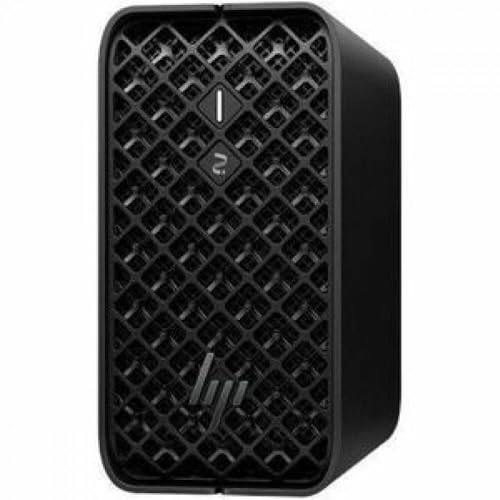
The HP Z2 Mini G1a brings the Ryzen AI Max platform into a compact workstation with the warranty, support, and manageability business IT wants. For a company standardising on a Strix Halo machine for local AI, it trades some value for enterprise-grade support.
View on Amazon →- AMD Ryzen AI Max workstation platform
- Up to 128GB unified memory
- Workstation warranty and support
- Business manageability options
- Enterprise support and warranty
- Compact workstation build quality
- Easier to standardise a fleet on
- Premium over consumer boxes
- Less DIY-friendly than the value picks
Ryzen AI Max+ 395 mini PCs at a glance
| Ryzen AI mini PC | Best for | Memory | Standout |
|---|---|---|---|
| GMKtec EVO-X2 | Value / cheapest 128GB | 128GB unified | Lowest 128GB price |
| Beelink GTR9 Pro | Home lab / networking | 128GB unified | Dual 10GbE, quiet |
| Framework Desktop | Configurable / repairable | Up to 128GB unified | Repairable design |
| Bosgame M5 | Value alternative | Up to 128GB unified | Competitive pricing |
| HP Z2 Mini G1a | Business IT | Up to 128GB unified | Workstation support |
What Is the Ryzen AI Max+ 395 (and Why It Matters for Local AI)?
The AMD Ryzen AI Max+ 395, codenamed Strix Halo, is a laptop-class chip that put workstation memory into a mini PC. It combines 16 Zen 5 CPU cores, a large Radeon 8060S integrated GPU with 40 compute units, and an NPU rated above 40 TOPS. The headline is the memory: up to 128GB of LPDDR5X-8000 shared across the whole chip.
That shared, or unified, memory is why these boxes matter for local AI. Up to 96GB can be handed to the GPU, so a Ryzen AI Max+ 395 mini PC loads models that would otherwise need an expensive discrete card with lots of VRAM. You get a machine that runs large local LLMs and still works as a normal Windows or Linux desktop.
- 16 Zen 5 cores — Strong general-purpose CPU for everyday work, not just AI.
- Radeon 8060S iGPU — 40 RDNA 3.5 compute units drive local inference.
- 128GB unified memory — Up to 96GB assignable to the GPU for big models.
- 40-plus TOPS NPU — Accelerates lightweight, built-in AI features.
Ryzen AI Max+ 395 vs NVIDIA DGX Spark
The Ryzen AI Max+ 395 and the NVIDIA DGX Spark are the two ways to get 128GB of AI memory on a desk in 2026. The DGX Spark uses the NVIDIA GB10 Grace Blackwell chip with full CUDA support and can run models up to around 200 billion parameters, and independent reviews give it the edge on raw AI performance. It also costs two to three times as much.
The Ryzen boxes win on price and flexibility. They reach the same 128GB unified memory for far less, and they double as full x86 desktops for normal work. The trade-off is tooling: NVIDIA CUDA is supported everywhere, while the AMD ROCm and Vulkan back-ends are improving but occasionally need more setup. Pick the DGX Spark for serious CUDA development, a Ryzen AI Max+ 395 box for the best big-model value.
- Price — Ryzen AI Max+ 395 boxes cost far less than the DGX Spark.
- Tooling — DGX Spark has full CUDA; Ryzen uses ROCm and Vulkan, which are improving.
- Performance — Reviews give the DGX Spark the edge on raw AI compute.
- Everyday use — Ryzen boxes are full x86 PCs; the DGX Spark is an Arm AI appliance.
How to Pick a Ryzen AI Max+ 395 Mini PC
Because every Ryzen AI Max+ 395 mini PC shares the same core silicon, the choice comes down to memory configuration, networking, cooling, and support — not raw AI speed, which is broadly similar across them. Decide how much unified memory you need first (128GB if you want the biggest models), then pick the box whose extras fit your setup.
- For value — The GMKtec EVO-X2 is the cheapest route to a full 128GB box.
- For a home lab — The Beelink GTR9 Pro adds dual 10GbE and quiet cooling.
- For repairability — The Framework Desktop is built to open, service, and reconfigure.
- For business IT — The HP Z2 Mini G1a brings workstation support and warranty.
Frequently Asked Questions
- The Ryzen AI Max+ 395 is the AMD Strix Halo processor — 16 Zen 5 cores, a 40-compute-unit Radeon 8060S GPU, and an NPU above 40 TOPS, with up to 128GB of unified LPDDR5X memory. That large, GPU-accessible memory is what lets a mini PC built on it run big local AI models.
- Ryzen AI Max+ 395 mini PCs come with up to 128GB of LPDDR5X-8000 unified memory, and up to 96GB of it can be assigned to the GPU. That is far more GPU-accessible memory than most discrete cards, which is why these boxes handle large local LLMs. Memory is soldered, so choose the capacity you need up front.
- Yes, the Ryzen AI Max+ 395 is one of the best value options for local LLMs in 2026. Its 128GB of unified memory runs 70B-class models comfortably and loads even larger ones, all in a mini PC that also works as a normal desktop. The main trade-off versus NVIDIA is the less mature ROCm tooling.
- It depends on budget and tooling. The NVIDIA DGX Spark has full CUDA, runs models up to about 200B parameters, and reviews give it the AI-performance edge — but it costs two to three times more. A Ryzen AI Max+ 395 box reaches the same 128GB memory for far less and doubles as an x86 PC. Choose the DGX Spark for CUDA development, Ryzen for value.
- There is no direct Intel equivalent that matches the Ryzen AI Max+ 395's unified memory capacity of up to 128GB. The closest comparison point in Intel's current lineup is the Core Ultra laptop processor family, but those chips do not match the Ryzen AI Max+ 395 for running large local models. Intel builds its NPU hardware for lightweight on-device features, not for hosting memory-heavy large language models.
- This page publishes no fixed price for any Ryzen AI Max+ 395 mini PC because retail pricing shifts week to week. Each product recommendation on this page links to Amazon with a live search query showing current inventory and cost. Check the live listing linked under each pick above to see current pricing instead of budgeting around a static number.
- Neither processor is flatly better than the other, because they belong to different hardware tiers and target different use cases. The Ryzen AI 9 370 is a lower-tier laptop processor that lacks the 128GB unified-memory ceiling of the Strix Halo Ryzen AI Max+ 395. The Ryzen AI Max+ 395 fits users who need massive memory capacity for local AI workloads, while the Ryzen AI 9 370 serves standard mobile computing tasks.
- Buying now makes sense if the current Ryzen AI Max+ 395's specs fit your workload, because AMD has not confirmed a successor chip or a release date. No verified replacement for the Strix Halo architecture exists on any official roadmap. If a system with up to 128GB of unified memory covers your local workflow today, waiting offers no guaranteed timeline or confirmed performance gain.
- AMD's ROCm software stack is workable today for common local LLM inference, so there is no need to wait for a local chat setup. Frameworks including llama.cpp, LM Studio, and the Vulkan backend run reliably on Ryzen AI Max+ 395 hardware for standard text tasks. Tooling gaps and parity limitations against NVIDIA CUDA remain for specialized developer tools and other, more demanding AI workloads.
- Ryzen AI Max+ 395 mini PCs ship with Windows and also run Linux well. Our best AI mini PCs FAQ on Windows versus Linux covers which fits an everyday office box versus an always-on AI agent.
- No, these Ryzen AI Max+ 395 boxes rely on soldered unified memory instead of a PCIe slot. Our mini PCs for local AI roundup covers the Minisforum MS-01, which does take a real discrete GPU.
- A 128GB Ryzen AI Max+ 395 box draws roughly 65 to 140W under sustained inference and well under 20W at idle. Our mini PCs for local AI power-draw breakdown works out what that costs to run around the clock.
- Yes, though image and video generation lean harder on GPU compute than chat inference, and our mini PCs for local AI FAQ on Stable Diffusion covers which of these boxes handle it best.
- For AI work that calls for a discrete GPU instead of shared unified memory, our best AI workstations roundup compares RTX-class towers against these Ryzen AI Max+ 395 boxes.
- Coverage on these boxes is typically a 1 to 2 year limited warranty handled through the reseller rather than a direct manufacturer support line. Our mini PCs for local AI warranty and support section breaks down what to expect versus a workstation-class business machine.
- Yes, NimoPC sells a mini PC built on the AMD Ryzen AI Max+ 395 processor with 16 cores and 32 threads. That machine uses the same silicon as our top-ranked GMKtec EVO-X2. Both pair the processor with a Radeon 8060S integrated graphics processing unit (GPU) featuring 40 compute units and a 50 TOPS neural processing unit (NPU). Because both machines share the identical chip, their specifications match closely. Memory capacity on the NimoPC box reaches 128GB of LPDDR5X-8000 unified memory. This memory is soldered at the factory, so you cannot upgrade capacity after purchase. Listed networking includes dual 2.5-gigabit Ethernet local area network (LAN) ports for a fast wired connection and Wi-Fi 7. For ports, it has dual USB4 for fast external storage and displays, plus HDMI 2.1 for connecting a monitor. Storage and operating systems vary across retail channels, with configurations offering 2TB to 4TB of non-volatile memory express (NVMe) solid-state storage alongside either Windows 11 or a pre-installed Linux distribution. The distinction between the two systems centers on configuration options and retail availability rather than compute capability. NimoPC distributes the unit directly and through at least one major US retailer (Best Buy). Retail pricing across this hardware category shifts frequently. You can size model requirements against a 128GB shared memory pool with our local AI hardware calculator.
Thinking about a Ryzen AI box for on-prem AI?
Layer3 Labs helps small and mid-size businesses stand up private, on-device AI — from sizing the model to picking the Ryzen AI mini PC and wiring it into your workflow, so your data stays in the office.
Book a free consultation