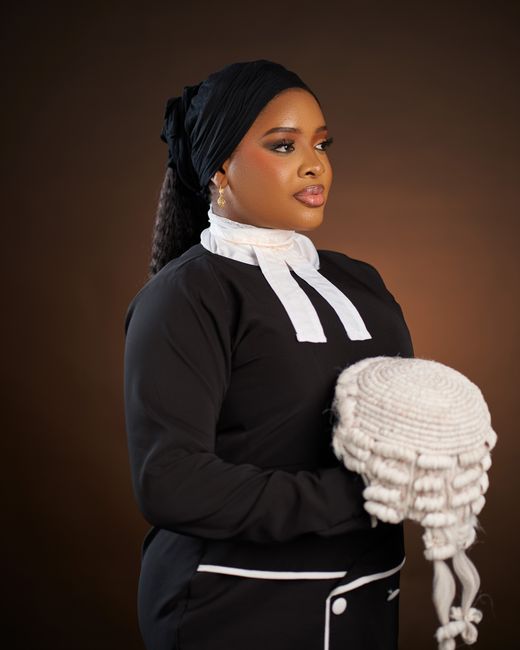
A solo immigration practice, twice the caseload, and every legal call still mine
Farah Haddad runs a solo immigration practice serving families and small employers, the kind of office where one person handles intake, forms, translation, and filing deadlines at once. She has kept it solo while roughly doubling her caseload, and she credits a careful, narrow use of AI: it drafts and checks, summarizes and translates, and watches her calendar, while every legal judgment and signature stays hers.
Walk us through what your practice looked like before you brought AI in.
It was me and a very full calendar. A solo immigration office means I am the intake coordinator, the paralegal, the translator on rough days, and the attorney, often on the same file within an hour. The forms were relentless. USCIS packages repeat the same client facts across many pages, so I re-keyed names, dates, and addresses by hand, then proofread for the transposition errors that creep in when you are tired. Clients arrived with folders in languages I do not all read, so I leaned on outside translators and waited. The real cost was the evenings: client-facing work during the day, administrative work at night. I could feel the ceiling on how many families I could take without hiring staff I could not yet afford.
What was the first thing you tried, and how did it go?
Document extraction, on a low-stakes file. A client brought a passport, a marriage certificate, and two prior notices, and I let a tool read them and pull the biographic details into a draft form. My first reaction was relief, then suspicion. The fields were mostly right, but I checked every one against the source, and I found a date read off the wrong line. That set the pattern I still follow: the draft is a starting point, not an answer. What surprised me more was the summarizing. I fed it a long, messy intake questionnaire and asked for a plain summary of the client's history and issues, and it returned in a minute what used to take me half an hour of reading. That was when I understood where this actually helps.
Concretely, how does AI fit into your routine now?
Three places, mostly. First, intake: after a consult, I turn my notes and the documents into a same-day summary of the client's situation, the relief they might qualify for, and what is still missing, so I open every file already oriented. Second, forms: I use extraction to draft the repetitive USCIS packages, then a checking pass to flag internal inconsistencies, a name spelled two ways, a date that does not line up across pages. Third, documents: I generate working translations and summaries of what clients bring me, so I can triage a folder and decide what needs certified human translation. Deadlines sit on top of all of it. Immigration runs on filing windows, so I keep a tracked calendar and nothing depends on my memory at eleven at night.
Where do you keep your hands on the wheel?
On everything that is judgment or privilege. I do not let a model decide eligibility, strategy, or what to file. It drafts and it flags; I decide. Confidentiality is the harder line. I will not paste a client's identifying details into a consumer tool that could store or reuse them, because that is a direct breach of my duty, and immigration files are unusually sensitive. Many of my clients come from places where handing your papers to an official ends badly, so I owe them a clear explanation of how their information is handled, and I only use tools that wall their data off. There is an unauthorized-practice line too: the software does not give legal advice. A summary or a translation is work product I stand behind, not a machine practicing law.
Is there a specific moment it earned its place?
A family adjustment case with a filing window I could not miss. The client had sent documents in three languages across several emails over months, and one of them, buried in a scanned attachment, was a prior removal notice that changed the analysis entirely. When I ran the folder through summarization during my review, it surfaced that notice near the top as something to look at. I would like to think I would have caught it reading page by page, but I was working late and moving fast, and the flag is what made me stop. I verified it against the original, then handled the case very differently than I otherwise would have. That was the day the tool stopped being a convenience and became part of how I protect clients.
What would you tell an immigration lawyer who is skeptical of all this?
I would tell them their skepticism is the right instinct, and to keep it. The failure mode I worry about in our field is a lawyer who trusts a confident-sounding output and files it, or one who lets a tool stand in for advice a client should get from a person. So do not start there. Start with the boring, verifiable work: summarizing documents you will read anyway, drafting forms you will check line by line, translating so you know what to send for certification. Pick tools that will tell you, in writing, what happens to client data. Keep your judgment and your signature out of the automation entirely. Used that narrowly, it does not dilute your practice. It returns the hours you were losing to re-keying and reading, and those hours go straight to clients.
How has it changed your work, and your clients' experience?
The honest headline is that I carry roughly twice the caseload I used to, in the same hours, without a team I could not sustain. That number comes with caveats: it depends on the mix of cases, and it is my own tally, not an audit. But the direction is real, and what it buys matters more. Clients get a same-day sense of where they stand instead of waiting a week for me to work through their file. Fewer deadlines slip, because the calendar does not rely on my memory. And I spend the reclaimed time on the parts of this work that are mine: sitting with a nervous family, thinking through a hard case, being the lawyer instead of the data-entry clerk. That is the change I care about.
In practice
The point was never to replace judgment, it was to remove the drag around it, so a solo office can serve more people without cutting corners.
- Roughly double the caseload in the same working hours, carried solo without adding staff she could not sustain.
- Same-day intake summaries, so clients learn where they stand right after the consult instead of waiting a week.
- Fewer missed filing deadlines, because immigration's filing windows sit on a tracked calendar rather than her memory.
About Farah Haddad
Farah Haddad runs a solo immigration practice serving families and small employers.