Lenovo Legion Tower 5-2026 Review: AI Workstation Fit
An AMD Ryzen 7 7800X3D and RTX 5070 gaming desktop, reviewed as a candidate for local AI inference and CAD work in a small business.

Capable AI-workstation hardware wrapped in gaming-desktop branding. It is worth considering once you budget for a Windows 11 Pro upgrade, but it ranks well behind the top alternatives selling alongside it.
Check price on Amazon →| Processor | AMD Ryzen 7 7800X3D |
|---|---|
| Graphics | NVIDIA GeForce RTX 5070 |
| Memory | 32GB |
| Storage | 1TB |
| Operating System | Windows 11 Home |
| Chassis | Eclipse Black tower |
| Included software | 3 months of PC Game Pass |
The Lenovo Legion Tower 5-2026 pairs an AMD Ryzen 7 7800X3D processor with an NVIDIA GeForce RTX 5070 graphics card in a full-size desktop tower, built and marketed by Lenovo as a gaming PC. That combination of a 3D V-Cache CPU and a current Blackwell-generation GPU is also what a lot of small businesses look for when they need a desktop that can run local AI models, CAD software, or data science workloads without paying workstation-line prices.
This review looks at the Legion Tower 5-2026 through that lens, not as a gaming rig, but as a candidate business AI workstation. It covers what the hardware can realistically do, where the consumer-focused parts of the build show, and how it compares to the other desktops selling on the same shelf.
What the Legion Tower 5-2026 Is Built For
The Legion Tower 5-2026 is Lenovo's mid-range gaming desktop line, and the 2026 AMD configuration sold here uses a Ryzen 7 7800X3D CPU paired with an RTX 5070 GPU. Lenovo lists it with 32GB of memory, 1TB of storage, and Windows 11 Home, wrapped in an Eclipse Black tower case.
That spec sheet reads less like a gaming machine and more like an entry point into serious compute once you look past the marketing. An eight-core CPU built for gaming latency, a current RTX GPU, and 32GB of RAM is enough headroom for a small team to run local AI inference, CAD packages, or data science notebooks that would otherwise call for a dedicated Xeon or Threadripper workstation.
For a business standardizing on one powerful desktop instead of a fleet of workstation-branded towers, that mix of parts is the real appeal. The Ryzen 7 7800X3D and RTX 5070 pairing shows up across gaming, creator, and workstation product lines in 2026 for the same reason: strong single-core performance next to real GPU compute, in one box.
- Best for: small teams that want GPU-accelerated local AI or CAD work without buying a workstation-branded machine
- Also good for: a single power-user desktop for data science or model experimentation
- Skip it if: you need Windows 11 Pro out of the box, a stated business warranty, or ECC memory
Performance: What the Ryzen 7 7800X3D and RTX 5070 Handle
The Ryzen 7 7800X3D is an eight-core desktop processor built around AMD's 3D V-Cache technology, which stacks extra cache directly on the chip to speed up workloads that lean on fast memory access. That design was built for gaming, but the same trait, quick access to a large working set, also helps data preprocessing and single-threaded steps in AI and CAD pipelines.
The RTX 5070 is part of NVIDIA's GeForce RTX 50 series, built on the Blackwell architecture. Blackwell-generation cards carry NVIDIA's current CUDA and TensorRT tooling, which is the software stack most local-AI frameworks and GPU-accelerated CAD tools target, so a business is not fighting outdated driver support to put the GPU to work.
For CAD and data science specifically, the RTX 5070's CUDA cores speed up viewport rendering in common 3D and simulation software, and its tensor cores give GPU-accelerated data science libraries real hardware to run on. None of that requires the Xeon or Threadripper branding some buyers assume a workstation needs.
The Catch: Windows 11 Home, Not Pro
Windows 11 Home is the one spec on this listing that separates it from an actual business workstation. Home edition does not include BitLocker device encryption, domain join, Group Policy management, or Remote Desktop hosting, features an IT team typically wants on a company machine.
At Layer3Labs, our own gear-radar routine tracks dozens of AI Workstations listings like this one every week, and the pattern repeats: a lot of the best-priced hardware for local AI and CAD work ships under a gaming badge with a consumer OS, because that is the market the hardware was designed to sell into. A business buying one of these machines should budget for a Windows 11 Pro upgrade, sold directly by Microsoft, before deploying it as a shared or IT-managed desktop.
The bundled 3 months of PC Game Pass is another consumer-market signal. It is a nice perk for a home buyer, irrelevant for a business deployment, and worth factoring into total setup time only if the business wants to disable or repurpose it.
Legion Tower 5-2026 vs the Other Desktops on This Shelf
The Legion Tower 5-2026 ranks #20 among the best-selling AI Workstations on Amazon, well behind machines like the iBUYPOWER Element and several Dell OptiPlex and Dell Tower configurations that currently outsell it in this category.
Against the iBUYPOWER Element, the Legion trades a slightly less powerful Ryzen chip for Lenovo's brand support and a more restrained case design; both ship an RTX 5070-class GPU. Against the Dell OptiPlex and Dell Tower listings below, the Legion's dedicated GPU is the deciding factor: none of those Dell configurations carry a discrete graphics card, which rules them out for local AI inference or GPU-accelerated CAD work entirely, even though the Dell OptiPlex 7050 SFF ships with Windows 11 Pro already installed.
Where the Legion Tower 5-2026 Falls Short as a Business Machine
The Legion Tower 5-2026's shortcomings are about positioning, not raw hardware. It was designed and marketed as a gaming desktop, and that shows in the OS edition, the bundled game subscription, and the absence of any stated business support tier in the listing.
None of that changes what the CPU and GPU can do, but it does mean a business buyer needs to plan for a software upgrade and manage expectations on support before treating it as a fleet-ready machine.
- Windows 11 Home — needs a Pro upgrade for domain join, BitLocker, and IT management
- No stated business support tier or extended on-site warranty in the listing
- Eclipse Black gaming-branded chassis, not a neutral office aesthetic
- Amazon lists only one feature category ("Gaming Desktop") — confirm exact port and connectivity specs with Lenovo before a bulk purchase
Where to buy the Lenovo Legion Tower 5-2026 (AMD) Desktop
Capable AI-workstation hardware wrapped in gaming-desktop branding. It is worth considering once you budget for a Windows 11 Pro upgrade, but it ranks well behind the top alternatives selling alongside it.
Check price on Amazon →Alternatives worth comparing
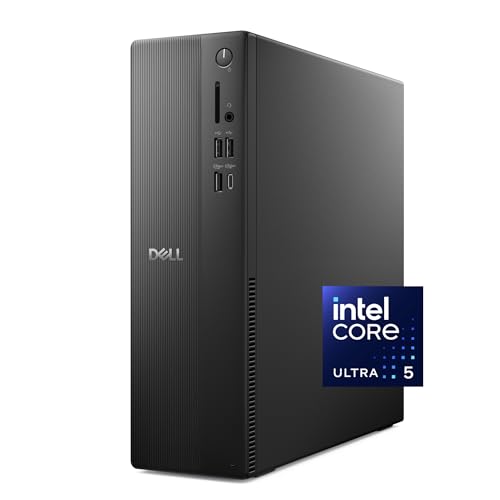
If the Lenovo Legion Tower 5-2026 (AMD) Desktop is not the right fit, these are the other ai workstations ranking alongside it right now.


Frequently Asked Questions
- Yes, within limits. The RTX 5070 GPU and 32GB of memory can run mid-size local AI models, but a business planning to run larger models should confirm how far the memory and storage in this configuration can be upgraded.
- No, it ships with Windows 11 Home. A business that needs domain join, BitLocker, or centralized device management should budget for a separate Windows 11 Pro upgrade.
- It uses an AMD Ryzen 7 7800X3D processor and an NVIDIA GeForce RTX 5070 graphics card, according to the Amazon listing.
- This configuration ships with 32GB of memory and 1TB of storage, per the listing.
- The Legion Tower 5-2026's biggest advantage is its dedicated RTX 5070 GPU. None of the Dell OptiPlex or Dell Tower configurations sold alongside it carry a discrete graphics card, which makes the Legion the only option among these alternatives for local AI inference or GPU-accelerated CAD work.
- It is a reasonable option if a Windows 11 Pro upgrade and gaming-oriented branding are not dealbreakers. The hardware itself, a current 3D V-Cache CPU and a Blackwell-generation GPU, matches what a lot of business AI workstation shoppers are actually looking for, even though it ranks lower in sales than several alternatives on this shelf.
Buying business desktops for your team?
Layer3 Labs helps small and mid-size businesses choose, standardize, and deploy the right AI-ready workstations, and the workflows that run on top of them.
Book a free consultation