Lenovo Legion Tower 5i Review: Built for Business AI Work?
A gaming-branded tower with a real discrete GPU — here's where that makes it a budget entry point for business AI work, and where it falls short.

A capable, RTX-equipped tower that works as a budget entry point into local AI and creative workloads, held back by base memory and storage most business deployments will need to upgrade right away.
Check price on Amazon →| Processor | Intel Core Ultra 7 265F |
|---|---|
| Graphics | NVIDIA GeForce RTX 5060 Ti (discrete) |
| Memory | 16GB 5600MHz DDR5, expandable to 128GB |
| Storage | 1TB |
| Connectivity | 2.5G Ethernet, Wi-Fi 6E |
| Cooling | Optimized air-cooling, up to 180W |
| Chassis | Tool-less transparent side panel, customizable RGB lighting |
| Included software | 3 months PC Game Pass + EA Play |
The Lenovo Legion Tower 5i pairs an Intel Core Ultra 7 265F processor with an NVIDIA GeForce RTX 5060 Ti graphics card in a desktop tower built for gaming. That same pairing, a modern CPU plus a discrete RTX GPU, is also the entry point most small businesses use for local AI inference, CAD rendering, and data science work.
This review covers what the Legion Tower 5i offers a business buyer, where its consumer-gaming roots show, and how it compares to the other desktops selling in the AI Workstations category right now. Every spec below comes from the manufacturer listing.
What the Legion Tower 5I Is — and Who Should Buy It
The Legion Tower 5i is a full-size desktop tower built around an Intel Core Ultra 7 265F processor and an NVIDIA GeForce RTX 5060 Ti discrete graphics card. Lenovo markets it as a gaming PC, and its RGB lighting and tool-less side panel confirm that lineage.
For a business, the same hardware doubles as an affordable local-AI or creative workstation. A discrete GPU is the single component that separates a machine that can run local AI models and GPU-accelerated 3D software from one that cannot, and this tower has one.
It fits a specific buyer: a small team that wants to experiment with local AI or GPU-heavy creative work without paying workstation prices, and that is comfortable upgrading memory and storage after purchase.
- Best for: small teams testing local AI inference, light 3D/CAD rendering, or GPU-accelerated creative work on a budget
- Also good for: a single power-user desktop that needs more graphics headroom than an office mini PC
- Skip it if: you need a workstation-certified GPU driver stack, ECC memory, or enterprise support
Performance: The Core Ultra 7 265F and RTX 5060 Ti Combo
The Intel Core Ultra 7 265F handles demanding multitasking and general compute work. Its F suffix means it ships without integrated graphics, so the system relies entirely on the RTX 5060 Ti for every display output and every GPU task.
Lenovo's listing credits that GPU with 'workflow acceleration' beyond gaming, and the claim tracks with how RTX hardware works in general. NVIDIA's RTX line carries CUDA cores and dedicated video encoders, the same building blocks used to accelerate local AI inference, 3D rendering, and video encoding, not just game frame rates.
Lenovo does not publish AI-specific benchmarks for this configuration, and none are stated in the listing. Treat inference speed on any specific model as something to test yourself, not a number this page can promise.
Memory: 16GB out of the Box, Real Headroom to Grow
The Legion Tower 5i ships with 16GB of 5600MHz DDR5 memory, and Lenovo states the system can be expanded to 128GB.
16GB is thin for serious local AI or data science work, where loaded models and datasets compete with the operating system for the same memory pool. The expansion path to 128GB matters more here than the starting configuration, since a business can buy the tower at its lower memory tier and add RAM later instead of replacing the machine.
At Layer3Labs, our own gear-radar routine tracks dozens of AI Workstations listings a week, and one pattern repeats: gaming towers with a real discrete GPU consistently undercut business-branded workstations carrying the same GPU tier, because the 'workstation' label mostly buys certified drivers and extended support, not more silicon. The tradeoff shows up in base memory and storage, which is usually the first thing worth upgrading on a machine like this one.
Connectivity, Cooling, and Build
The tower includes 2.5G Ethernet and Wi-Fi 6E for network throughput, which matters when moving large model weights or datasets across a local network.
Lenovo cools the system with what it describes as an optimized air-cooling solution rated up to 180W. The transparent, tool-less side panel makes future GPU, memory, or storage upgrades straightforward without needing a screwdriver.
Where the Legion Tower 5I Falls Short for Business
The Legion Tower 5i's limits are the limits of a consumer gaming tower repurposed for business use. None of them are dealbreakers, but each one adds a line item to the real cost of deploying it.
- 1TB of storage is modest for datasets, model checkpoints, and CAD project files — plan on adding a drive
- 16GB of base memory is undersized for serious local AI or multitasking workloads, even though it upgrades to 128GB
- No workstation-certified GPU drivers, ECC memory, or enterprise support tier — this is consumer hardware, not a certified workstation
- 3 months of PC Game Pass and EA Play are gaming perks with no business relevance
Legion Tower 5I vs the Other AI Workstations
Against the other desktops selling in the AI Workstations category, the Legion Tower 5i is one of the few here with a current-generation discrete GPU built in.
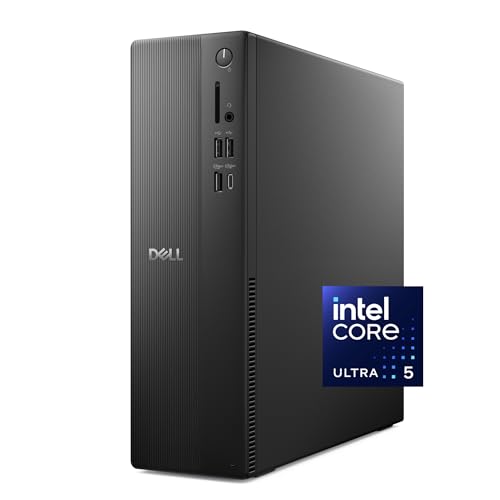
The iBUYPOWER Element pairs a higher-tier RTX 5070 GPU with double the RAM (32GB) and a Ryzen 9 CPU, which puts it ahead of the Legion Tower 5i for teams that can spend more upfront. The Dell OptiPlex, Dell Slim, and Dell Tower models trade the discrete GPU away entirely for CPU-only configurations built for office work, not local AI or 3D rendering.
That split makes the choice simple. Pick the Legion Tower 5i or the iBUYPOWER Element if GPU work is the point; pick one of the Dell desktops if the machine is only ever going to run office software.
Where to buy the Lenovo Legion Tower 5i
A capable, RTX-equipped tower that works as a budget entry point into local AI and creative workloads, held back by base memory and storage most business deployments will need to upgrade right away.
Check price on Amazon →Alternatives worth comparing
If the Lenovo Legion Tower 5i is not the right fit, these are the other ai workstations ranking alongside it right now.


Frequently Asked Questions
- Yes, with caveats. Its NVIDIA GeForce RTX 5060 Ti graphics card gives it real local-AI and GPU-accelerated capability that most office desktops lack, but the base 16GB of memory and 1TB of storage are thin for serious workloads and should be treated as a starting point, not a final configuration.
- It can run smaller local AI models thanks to its discrete RTX 5060 Ti GPU. Lenovo does not publish AI-specific benchmarks for this configuration, so actual inference speed depends on the model size and is worth testing against your own workload.
- Up to 128GB. It ships with 16GB of 5600MHz DDR5, and Lenovo states the system can be expanded well beyond that starting configuration.
- No. The Intel Core Ultra 7 265F carries an F suffix, which means it ships without integrated graphics, so every display output and GPU task runs through the RTX 5060 Ti.
- 2.5G Ethernet and Wi-Fi 6E, along with the standard I/O ports Lenovo lists for the tower. That combination supports fast local file transfer, useful when moving large model weights or datasets.
- Yes. It ships with a tool-less, transparent side panel built specifically for swapping memory, storage, and other components without a screwdriver, and Lenovo states memory can grow to 128GB.
Buying business desktops for your team?
Layer3 Labs helps small and mid-size businesses choose, standardize, and deploy the right AI-ready workstations, and the workflows that run on top of them.
Book a free consultation