EMEET C60E Dual-Camera 4K Webcam Review
Two cameras, one USB cable: a wide-angle and telephoto lens sharing a 4K sensor, built for switching between a full-room shot and a close-up.
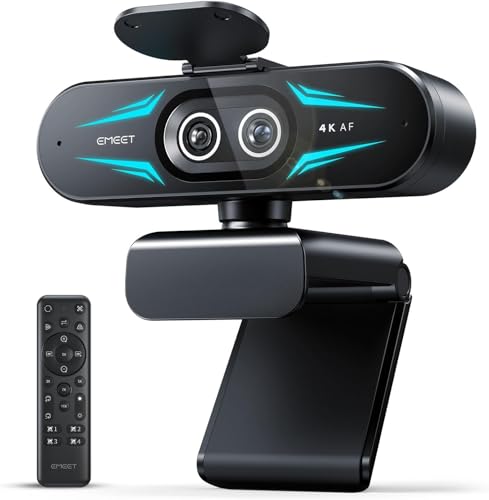
A capable dual-lens 4K webcam for teams that want both a wide shot and a close-up from one camera. It is not a motorized PTZ camera, so buyers expecting autonomous speaker tracking should look elsewhere.
Check price on Amazon →| Sensor | 1/2.8" CMOS 4K sensor, shared by two cameras |
|---|---|
| Cameras | Wide-angle (full scene) + telephoto (close-up, ~13.8 in recommended distance) |
| Zoom | 1X to 11X hybrid zoom (reference points at 3X, 5X, 7X); not supported in 4K, 60FPS, or YUY2 modes |
| Autofocus | PDAF (phase-detection autofocus) |
| Controls | Included remote (zoom, color) + EMEET STUDIO software (brightness, focus, RGB lighting) |
| Lighting | RGB accent lighting (red, green, blue) |
| Microphones | 2 omnidirectional mics, ~9.8 ft pickup radius |
| Connectivity | USB 2.0 Type-A, plug-and-play; 1/4" tripod mount |
| OS compatibility | Windows 10/11 (64-bit), macOS 10.14+ |
| Software compatibility | OBS, Twitch, YouTube, Facebook |
The EMEET C60E is a USB webcam built around two cameras instead of one, a wide-angle lens for the full room and a telephoto lens for close-up detail, sharing a single 1/2.8-inch 4K sensor. For a small business setting up meeting rooms, streaming product demos, or recording training video, that combination lets one camera cover framing jobs that usually need two separate setups.
This review covers what the dual-camera design actually does, where the zoom and autofocus hold up, and how the C60E compares to the other cameras selling alongside it in the same shelf pull. Every spec below comes from the manufacturer listing, and nothing here is a fabricated benchmark or hands-on test result.
What the EMEET C60E Is — and Who Should Buy It
The EMEET C60E pairs two cameras behind one USB connector, a gray wide-angle lens on the left and a blue telephoto lens on the right, both sharing a 1/2.8-inch CMOS 4K sensor. Switching between them is meant for moving from a full-room shot to a close-up without repositioning the camera or bolting on a second one.
It fits businesses that stream product demos, run remote training, teach over video, or want one camera flexible enough for both a wide meeting-room view and a tight presenter close-up. It is a weaker fit for teams expecting motorized pan-tilt-zoom hardware that physically tracks a speaker around a room, since the C60E's zoom is a lens-and-software function, not a moving camera body.
- Best for: product demos, training video, and hybrid meetings that need both a wide shot and a close-up
- Also good for: streamers and presenters on OBS, Twitch, YouTube, or Facebook who want fast framing changes mid-session
- Skip it if: you specifically need a motorized PTZ camera that pans and tilts on its own to follow a speaker
How the Dual-camera and Zoom Actually Work
The C60E's two lenses split the framing job instead of asking one lens to do both. The wide-angle camera holds near focus on people and backgrounds for a full-scene view, while the telephoto camera is built for detailed close-ups at a recommended distance of about 13.8 inches.
Zoom runs from 1X up to a maximum of 11X, with reference points along the way at 3X, 5X, and 7X, and PDAF autofocus keeps the image focused through that range. The zoom itself is driven through the included remote or the EMEET STUDIO software, not by moving the camera body, so framing changes happen mid-call without anyone touching the hardware.
Remote and EMEET STUDIO Controls
The C60E ships with two separate ways to adjust the image, a physical remote for quick changes and EMEET STUDIO software for finer control. The remote handles fast, in-call adjustments like zoom and color without interrupting a stream or meeting in progress.
EMEET STUDIO adds finer control over brightness, focus, and the camera's RGB lighting when you have time to set it up ahead of a session. Having both an offline hardware control and an online software control gives more flexibility than the single-mode adjustment most webcams offer.
RGB Lighting, Mounting, and Connections
The C60E carries RGB lighting in red, green, and blue around its dual-lens housing. Beyond looks, the manufacturer positions the lighting as a status indicator that shows the camera is active, and as a way to set a mood for a stream or call.
Connectivity is straightforward: a single USB 2.0 Type-A cable for plug-and-play setup, a 1/4-inch thread for tripod mounting, and two omnidirectional microphones that pick up clear audio within roughly a 9.8-foot radius. It supports Windows 10/11 (64-bit) and macOS 10.14 and newer, and it works with OBS, Twitch, YouTube, and Facebook.
Where the EMEET C60E Falls Short
The C60E's limits follow directly from its design as a dual-lens USB webcam rather than a motorized room camera. Zoom is a software-and-lens function that switches off in certain capture modes, not a feature that works the same way in every setting.
It also connects over USB 2.0, an older standard than the USB 3.x connections increasingly common on newer 4K cameras, and it has no autonomous speaker-tracking that repositions the camera without someone adjusting zoom. At Layer3Labs, our own gear-radar routine tracks dozens of Conference Cameras listings a week, and the pattern that stands out is how often AI or smart framing language on a webcam listing turns out to mean software-driven digital zoom rather than a motorized lens that physically follows a speaker on its own, which is worth checking before assuming a listing includes hardware tracking.
- Zoom disabled in 4K, 60FPS, and YUY2 capture modes
- USB 2.0 connection, not the newer USB 3.x standard
- No motorized pan-tilt-zoom, the camera body itself does not move to track a speaker
EMEET C60E vs the Alternatives
Against the other cameras selling in this category right now, the C60E is one of the few listings built around two cameras and hybrid zoom rather than one fixed lens. That design makes it the closest fit for anyone who wants both a wide shot and a close-up out of a single unit instead of buying two separate cameras.
If a single 1080p lens covers the need, the Logitech Brio 101 and Brio 100 handle that with a simpler setup and no zoom-mode decisions to make. EMEET's own C960 lineup offers single-camera 4K options with wider fields of view for anyone who prefers one lens over two. The full comparison set, with a reason for each pick, is below.
Where to buy the EMEET C60E Dual-Camera 4K Webcam
A capable dual-lens 4K webcam for teams that want both a wide shot and a close-up from one camera. It is not a motorized PTZ camera, so buyers expecting autonomous speaker tracking should look elsewhere.
Check price on Amazon →Alternatives worth comparing
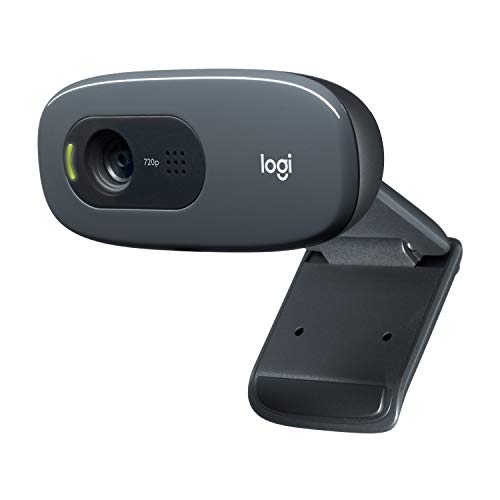
If the EMEET C60E Dual-Camera 4K Webcam is not the right fit, these are the other conference cameras ranking alongside it right now.


Frequently Asked Questions
- No, the EMEET C60E does not have a motorized PTZ mechanism. It uses two fixed cameras, wide-angle and telephoto, plus a hybrid digital zoom controlled by remote or software, not a camera body that physically pans or tilts on its own.
- The wide-angle camera covers the full scene with near focus on people and backgrounds, while the telephoto camera is built for close-up detail at a recommended distance of about 13.8 inches. Switching between them replaces repositioning the camera or adding a second one for close-ups.
- No, zoom is not supported in 4K, 60FPS, or YUY2 capture modes. Check which capture mode your meeting or streaming software uses before relying on zoom during a live session.
- The C60E supports Windows 10/11 (64-bit) and macOS 10.14 and newer. It also works with streaming platforms and software including OBS, Twitch, YouTube, and Facebook.
- Yes, it includes a 1/4-inch tripod thread for mounting on a stand or tripod. That makes it easier to position for a wider meeting-room shot or a dedicated presenter angle.
- The C60E has two built-in omnidirectional microphones. They pick up clear audio within roughly a 9.8-foot radius, enough for a single presenter or a small huddle around a desk.
- It is built for both. The manufacturer lists the same wide-angle-to-telephoto switch as useful for streaming, teaching, product demonstrations, and remote meetings, and the USB 2.0 Type-A connection keeps setup plug-and-play for any of those uses.
Rolling out webcams for your team?
Layer3 Labs helps small and mid-size businesses choose, standardize, and deploy the right video-meeting hardware, and the workflows that run on it.
Book a free consultation