KAMRUI AK1PLUS Mini PC Review: A Budget Celeron Desktop
A low-cost Intel Celeron mini PC for basic office and kiosk work — here's exactly what it can do, and the corners it cuts to hit the price.

A genuinely cheap, quiet desktop for light tasks and fixed-function roles like signage and front desks. The Celeron chip and soldered memory cap how far it can grow, so buy it for simple work, not as a machine you plan to push.
Check price on Amazon →| Processor | Intel Celeron N5095 (4 cores, 4 threads, up to 2.9GHz) |
|---|---|
| Graphics | Intel UHD Graphics (integrated) |
| Memory | 16GB LPDDR4X (soldered, not upgradable) |
| Storage | 256GB M.2 2280 SSD; expandable to ~4TB (M.2 + 2.5-inch bay) |
| Displays | Dual 4K at 60Hz via 2x HDMI 2.0 |
| Ports | 4x USB 3.2, 2x HDMI 2.0, Gigabit Ethernet, 3.5mm audio |
| Management | Auto Power On, RTC Wake, Wake-on-LAN |
The KAMRUI AK1PLUS is an entry-level Intel Celeron mini PC built for basic office work, web apps, and always-on roles like kiosks and digital signage. Its whole appeal is doing simple computing reliably at one of the lowest prices in the category, and for that narrow job it delivers.
This review covers what the AK1PLUS handles comfortably, where its budget chip runs out of room, and how it stacks up against the other mini PCs on the same shelf. Every spec below comes from the manufacturer listing.
What the KAMRUI AK1PLUS Is — and Who Should Buy It
The KAMRUI AK1PLUS is a palm-sized desktop built around the Intel Celeron N5095, a low-power quad-core chip aimed at basic computing rather than heavy work. It is the kind of machine you buy when the job is simple and the budget is tight.
It fits best where a computer needs to be cheap, small, and dependable rather than fast. Reception desks, classrooms, digital signage, kiosks, and second machines for email and browsing are its natural home. It is a poor fit for anyone doing heavy multitasking, creative work, or local AI, which the Celeron simply is not built for.
- Best for: basic office tasks, web apps, kiosks, and digital signage
- Also good for: a cheap second desktop or a set-and-forget always-on machine
- Skip it if: you run heavy multitasking, creative software, or local AI models
Performance: What the Celeron N5095 Handles
The Intel Celeron N5095 is a four-core, four-thread processor with no hyperthreading, which places it firmly in entry-level territory. It handles web browsing, email, online classes, video calls, and document work, and KAMRUI rates it around 30% faster than the older Celeron N4500 it competes with.
Where it slows down is anything that stacks work on top of work. Because it has only four threads and no hyperthreading, a wall of browser tabs plus a video call plus a large spreadsheet will start to feel sluggish. Integrated Intel UHD Graphics drive two 4K displays cleanly, but they are not built for editing, 3D, or gaming.
The Upside: Cheap, Quiet, and Roomy Storage
Storage is where the AK1PLUS is more generous than its price suggests. It ships with a 256GB M.2 2280 SSD and leaves room to grow, supporting an M.2 SATA or NVMe drive up to 2TB plus a 2.5-inch SATA SSD or hard drive up to 2TB, for roughly 4TB total.
That makes it a surprisingly capable little file box or media machine. Paired with its quiet, low-power cooling and management features like Auto Power On and Wake-on-LAN, it runs happily as an always-on device you tuck away and forget — a real advantage for signage and kiosk deployments.
Ports, Displays, and Desk Fit
The AK1PLUS covers the basics an office desk needs and little more. It offers four USB 3.2 ports, two HDMI 2.0 outputs for a dual 4K setup, Gigabit Ethernet, and a 3.5mm audio jack.
Notably, there is no USB-C and no DisplayPort, so you are limited to two HDMI monitors and cannot daisy-chain modern USB-C docks or displays. The wired Gigabit port and management features make it well suited to fixed installs where it sits in one place and does one job.
Where the KAMRUI AK1PLUS Falls Short
The AK1PLUS's weaknesses are the trade-offs of a rock-bottom price. The Celeron chip is the biggest one, but the soldered memory is the quieter, more permanent limit.
- 16GB LPDDR4X memory is soldered to the board, so you can never add more RAM — the day 16GB is not enough, the whole unit is capped
- The Celeron N5095 has no hyperthreading, so heavy multitasking bogs down quickly
- No USB-C or DisplayPort, and a two-monitor ceiling
- KAMRUI is a value brand — support and resale value trail Lenovo, Dell, or HP
KAMRUI AK1PLUS vs the Alternatives
Against the other best sellers, the AK1PLUS is the entry point — the cheapest, simplest choice for the lightest work. If your tasks ever go beyond browsing and documents, spending a little more buys a lot more machine.
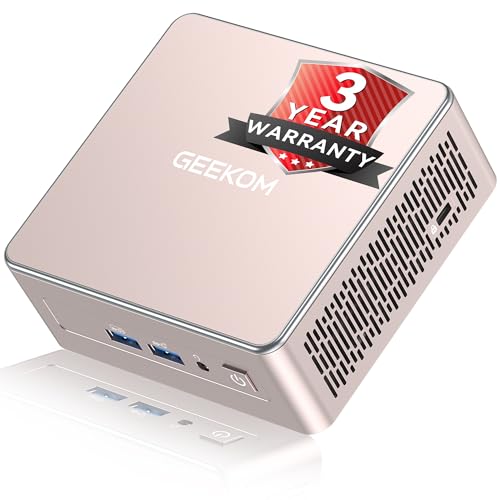
KAMRUI's own Pinova P1 and P2 step up to real AMD Ryzen chips with eight threads, triple-display support, and USB-C, and the GEEKOM models add upgrade room the AK1PLUS lacks. The full comparison set is below.
Where to buy the KAMRUI AK1PLUS Intel Celeron Mini PC
A genuinely cheap, quiet desktop for light tasks and fixed-function roles like signage and front desks. The Celeron chip and soldered memory cap how far it can grow, so buy it for simple work, not as a machine you plan to push.
Check price on Amazon →Alternatives worth comparing
If the KAMRUI AK1PLUS Intel Celeron Mini PC is not the right fit, these are the other mini pcs ranking alongside it right now.


Frequently Asked Questions
- It is good for light and fixed-function business roles. The AK1PLUS handles email, web apps, video calls, and dual 4K displays, and its quiet always-on design suits kiosks, signage, and reception desks. It is not the right pick for heavy multitasking or creative work.
- Only very small ones, and slowly. Its Intel Celeron N5095 and integrated UHD graphics are not built for AI inference and there is no NPU. For on-device AI, choose a mini PC with a dedicated GPU or a Ryzen AI chip with an NPU.
- No. The 16GB of LPDDR4X memory is soldered to the board and cannot be upgraded. You can, however, expand storage — it supports an M.2 drive and a 2.5-inch SATA drive for up to about 4TB total.
- Two. It has two HDMI 2.0 outputs that support dual 4K displays at 60Hz. There is no USB-C or DisplayPort, so two HDMI screens is the ceiling.
- Yes. It includes Auto Power On, RTC Wake, and Wake-on-LAN, which make it easy to manage remotely and well suited to kiosks, digital signage, and always-on deployments.
Choosing mini PCs for your business?
Layer3 Labs helps small and mid-size businesses choose, standardize, and deploy the right AI-ready hardware, and the workflows that run on it.
Book a free consultation