KAMRUI Pinova P2 Review: The Zen 3 Ryzen Budget Mini PC
KAMRUI's strongest budget chip in a tiny, portable body — a Zen 3 Ryzen 7330U built for heavier multitasking. Here's where it fits, and where it doesn't.

The most capable of KAMRUI's budget mini PCs, with a modern Zen 3 Ryzen 7330U that handles real multitasking, coding, and data work in a genuinely pocketable case. Integrated graphics and soldered memory are the ceiling, but for a portable budget desktop it punches above its price.
Check price on Amazon →| Processor | AMD Ryzen 7330U (Zen 3, 4 cores, 8 threads, 8MB L3, 15W) |
|---|---|
| Graphics | AMD Radeon Graphics (6 CUs, up to 1.8GHz) |
| Memory | 16GB LPDDR4X (soldered, not upgradable) |
| Storage | 256GB M.2 SSD; two M.2 2280 slots, expandable to ~4TB |
| Displays | Triple 4K at 60Hz via HDMI 2.0, DisplayPort 1.4, USB-C (DP Alt Mode) |
| Ports | USB-C (10Gbps, DP), 2x USB 3.2 Gen 2 Type-A, HDMI, DisplayPort, 3.5mm |
| Connectivity | Gigabit LAN, Wi-Fi, Bluetooth |
| Size | 5.05 x 5.05 x 1.73 inches; VESA mount included |
The KAMRUI Pinova P2 is a compact AMD Ryzen 7330U mini PC built for heavier everyday work — multitasking, coding, and data tasks — in a body small enough to travel with. Its Zen 3 processor is the strongest chip in KAMRUI's budget lineup, which makes it the pick when you want more than basic office performance without leaving the value price class.
This review covers what the Pinova P2 does well, where its integrated graphics and fixed memory limit it, and how it compares to the other mini PCs on the same shelf. Every spec below comes from the manufacturer listing.
What the KAMRUI Pinova P2 Is — and Who Should Buy It
The KAMRUI Pinova P2 is a small, portable desktop built around the AMD Ryzen 7330U, a modern Zen 3 chip with four cores and eight threads. It is aimed at people who want budget pricing but a genuinely capable processor, in a case measuring just 5.05 by 5.05 by 1.73 inches that slips into a bag.
It suits home offices, remote workers, and anyone whose day involves heavier multitasking, coding, or data work than a basic Celeron box can manage. Its portability makes it a natural fit for people who move between a home desk and an office. It is not built for 3D, serious gaming, or large local AI models, which need a dedicated graphics card it lacks.
- Best for: heavier office multitasking, coding, and data work on a budget
- Also good for: a portable desktop you carry between home and office, and triple-monitor setups
- Skip it if: you need discrete-GPU power for 3D, gaming, or local AI inference
Performance: What the Ryzen 7330U Handles
The AMD Ryzen 7330U is a Zen 3 processor with four cores, eight threads, and 8MB of L3 cache, running at a modest 15W. That combination is what sets the P2 apart from cheaper mini PCs: it keeps heavy multitasking, coding, and data work smooth where a Celeron or an older Ryzen chip would stall.
In practice that means large browser sessions, business software, and productivity tools all running at once without the system bogging down. Its integrated Radeon Graphics, with six compute units clocked up to 1.8GHz, are a step above older integrated chips and handle 4K video and light photo work, though they are still not built for heavy editing, rendering, or gaming.
The Standout: A Capable Desktop That Travels
Portability paired with real performance is the Pinova P2's defining trait. At 5.05 by 5.05 by 1.73 inches with an included VESA mount, it is small enough to drop into a bag for a business trip or clip behind a monitor to reclaim desk space.
Few budget mini PCs combine that footprint with a modern Zen 3 chip and triple-display output. For a remote worker who wants one machine that follows them between locations and still drives a full multi-monitor setup on arrival, that mix is genuinely useful.
Ports, Displays, and Expansion
The Pinova P2 covers modern connections well for its size. Its USB-C port carries 10Gbps data and DisplayPort video, and it is joined by two 10Gbps USB 3.2 Gen 2 Type-A ports, HDMI 2.0, DisplayPort 1.4, Gigabit LAN, Wi-Fi, Bluetooth, and a 3.5mm jack — enough to drive three 4K screens at 60Hz at once.
Storage is expandable even though memory is not. The P2 has two M.2 2280 slots — one SATA/NVMe PCIe 3.0 and one SATA — supporting up to about 4TB total, so you can add plenty of space for projects and media down the line.
Where the KAMRUI Pinova P2 Falls Short
The Pinova P2's weaknesses are the trade-offs of a small, low-cost design. The chip is capable, but two limits are baked in from the start.
- 16GB of LPDDR4X memory is soldered to the board, so RAM can never be upgraded — plan around 16GB for the life of the machine
- Integrated Radeon Graphics — fine for displays, video, and light editing, not for GPU-heavy work or serious local AI
- The four-core, 15W chip is efficient, not a workstation replacement for sustained heavy loads
- KAMRUI is a value brand — support and resale value trail Lenovo, Dell, or HP
KAMRUI Pinova P2 vs the Alternatives
Against the other best sellers, the Pinova P2 is the strongest of the budget KAMRUI models and the pick when you want more performance without leaving that price class. Its Zen 3 Ryzen 7330U outpaces the AK1PLUS's Celeron and the Pinova P1's older Ryzen chip.
If you would trade the P2's soldered memory for upgrade room, the GEEKOM A5 takes RAM to 64GB, and the GEEKOM A7 steps up to an 8-core chip with DDR5 for heavier workloads. The full comparison set is below.
Where to buy the KAMRUI Pinova P2 AMD Ryzen 7330U Mini PC
The most capable of KAMRUI's budget mini PCs, with a modern Zen 3 Ryzen 7330U that handles real multitasking, coding, and data work in a genuinely pocketable case. Integrated graphics and soldered memory are the ceiling, but for a portable budget desktop it punches above its price.
Check price on Amazon →Alternatives worth comparing
If the KAMRUI Pinova P2 AMD Ryzen 7330U Mini PC is not the right fit, these are the other mini pcs ranking alongside it right now.


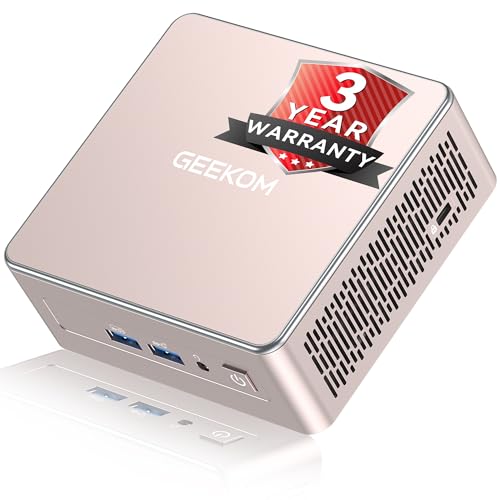
Frequently Asked Questions
- Yes, the Pinova P2 is a strong budget business desktop. Its Zen 3 Ryzen 7330U handles heavier multitasking, coding, and data work, it drives three 4K monitors, and its pocketable size suits remote workers who move between locations.
- Only small ones, and slowly. Despite its newer Radeon Graphics, the P2 has no NPU and no dedicated GPU, so it is not built for AI inference. For on-device AI, choose a mini PC with a dedicated GPU or a Ryzen AI chip that includes an NPU.
- No. The 16GB of LPDDR4X memory is soldered to the board and cannot be upgraded. Storage is expandable, though — it has two M.2 2280 slots supporting up to about 4TB total.
- The P2 is the more capable machine. Its modern Zen 3 Ryzen 7330U with 8MB of L3 cache handles heavier multitasking than the P1's older Ryzen chip, and it comes in a smaller, more portable case, though the P2's memory is soldered rather than DDR4.
- Yes. It measures 5.05 by 5.05 by 1.73 inches and weighs little, so it fits easily in a bag for business trips. It also includes a VESA mount to attach it behind a monitor or on a wall.
- No — the Pinova P2 listing we reviewed (ASIN B0BC7S9R5C) ships with an AMD Ryzen 7330U, a Zen 3 chip, not a Ryzen 3 3300U. The '3300U' is an older, lower-tier Zen+ chip AMD made for a previous generation of budget laptops and mini PCs, and it is easy to confuse the two names when comparing listings. KAMRUI and other budget mini-PC brands do sell multiple CPU tiers under similar model names, so always check the exact processor listed on the specific product page or box before buying, rather than assuming every 'Pinova P2' or similarly-named unit ships with the same chip reviewed here.
Choosing mini PCs for your business?
Layer3 Labs helps small and mid-size businesses choose, standardize, and deploy the right AI-ready hardware, and the workflows that run on it.
Book a free consultation