Logitech H391 Review: A USB-C Headset for Modern Laptops
The H390's USB-C sibling — same clear-call profile, right plug for MacBooks and thin Windows laptops, and a build with 53% recycled plastic.

The right headset to standardize on if your team is on USB-C-only laptops. Same clear-call profile as the H390, no dongle in the drawer, and a modestly greener build.
Check price on Amazon →| Connection | Wired USB-C (plug-and-play) |
|---|---|
| Cable length | 6.23 ft (1.9 m) |
| Microphone | Rotating noise-canceling boom |
| Audio | Digital stereo, fine-tuned drivers |
| Controls | In-line volume and mute |
| Ear cushions | Leatherette, swivel-mounted, adjustable headband |
| Compatibility | Works With Chromebook certified; common call and meeting apps on major OSes |
| Materials | 53% post-consumer recycled plastic; FSC-certified packaging |
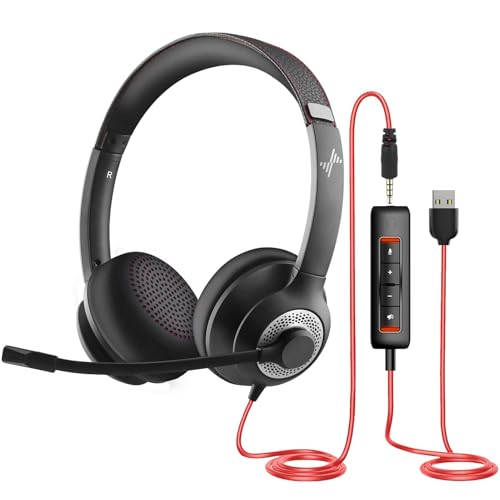
The Logitech H391 is a wired USB-C headset built for the same job as its older sibling, the H390: sit at a desk, take calls all day, sound clear. The only meaningful change is the plug — USB-C instead of USB-A — which matters more than it sounds when your entire team is on MacBooks or thin Windows ultrabooks.
This review covers what the H391 does, where a wired USB-C headset makes sense, and where you would still pick a Bluetooth model instead. Every spec here is from Logitech's listing.
What the H391 Is — and Who Should Buy It
The H391 is a wired, over-the-head USB-C headset with a swivel-mount boom mic. It is not wireless, and it is not new territory for Logitech — it is the USB-C variant of the H390, which is the default entry-level business headset most IT teams already know.
It is the correct choice when the desks it is going onto all have USB-C ports and nobody wants to keep a dongle in a drawer. That describes most 2020-and-later MacBooks, most XPS-class Windows laptops, and most Chromebooks.
- Best for: MacBook-first teams, USB-C-only Windows ultrabook fleets, and Chromebook rollouts
- Also good for: hot-desks and shared seats where a wired headset stays put
- Skip it if: you have older USB-A desktops (get the H390), or you need to walk around during calls (get a Bluetooth model)
Sound and Mic: Same Voice-first Tuning
The H391 uses fine-tuned drivers for digital stereo, tuned the same way the H390's are — clean and mid-forward, which is what your ear wants for voice calls. Music sounds fine; nobody buys this headset as a music headset.
The rotating noise-canceling boom microphone is the important part. It sits close to your mouth, picks up your voice, and rejects most steady room noise. When you are done, the boom rotates up and out of the way. That is the same ergonomic detail that makes the H390 easy to live with.
Comfort and Materials
The H391 uses swivel-mounted leatherette ear cushions on an adjustable padded headband. That is the standard business-headset formula, and it is comfortable for hours at a time, with the usual caveat that leatherette runs warmer than fabric in a hot room.
Logitech notes that the H391's plastic parts include 53% post-consumer recycled material and that it ships in FSC-certified paper packaging. If sustainability is a real procurement criterion for your org, the H391 gives you slightly more to point to than the H390 does.
USB-C, Plug-and-play
There are no drivers to install and no app to fight. Plug the USB-C connector into a laptop, pick 'H391' as the audio device in the meeting app, and you are on. The 6.23 ft cable is long enough to run from a laptop up to your head with slack to spare.
In-line volume and mute controls live on the cable within reach, so muting yourself when a delivery driver rings the doorbell takes half a second. Logitech also certifies the H391 as Works With Chromebook, which matters for Google-shop schools and businesses.
Where the H391 Falls Short
The H391 inherits its sibling's honest limits.
- It is wired — you cannot walk away from your desk during a call
- USB-C only — not helpful for older USB-A desktops (get the H390)
- No companion app for EQ, sidetone, or mic-level tuning like Logitech's Zone models
- Leatherette pads warm up over long sessions in a hot room
H391 vs the Alternatives
Against the other headsets ranked next to it, the H391 is the default choice for USB-C fleets. The Logitech H390 is the same headset with USB-A, for older desktops. The Logitech Zone 300 is Logitech's genuine Bluetooth option if walking around matters. JIAMQISHI's wired model is cheaper and adds 3.5mm, and the Jabra Evolve 10 is Jabra's comparably-priced wired enterprise pick.
The full comparison set is below.
Where to buy the Logitech H391 USB-C Headset
The right headset to standardize on if your team is on USB-C-only laptops. Same clear-call profile as the H390, no dongle in the drawer, and a modestly greener build.
Check price on Amazon →Alternatives worth comparing
If the Logitech H391 USB-C Headset is not the right fit, these are the other wireless headsets ranking alongside it right now.


Frequently Asked Questions
- No. It is a wired headset that connects with a USB-C cable, not Bluetooth. It appears in Amazon's Wireless Headsets category, but the actual product is wired.
- The connector. The H390 uses USB-A, the H391 uses USB-C. Everything else — drivers, mic, controls, comfort — is the same.
- Yes. Plug the USB-C cable into any MacBook USB-C port and select 'H391' as your audio input and output — no drivers required.
- Yes. Logitech lists it as Works With Chromebook, so it is a safe standard for Google-shop teams and schools.
- It depends on the phone. USB-C Android phones that support USB audio typically work. Newer iPhones with USB-C support USB audio too, but check your specific model — Logitech markets this headset primarily for computer use.
- A data-capable USB-C-to-USB-A adapter should work with the Logitech H391, but a 3.5mm adapter will not. The Logitech H391 operates as a digital USB device, so a USB-A data adapter simply changes the physical connector shape. A 3.5mm adapter fails because the Logitech H391 contains no analog audio circuitry. For setups that need USB-A, buying the sibling Logitech H390 avoids dongles entirely because it shares the same hardware with a native USB-A cable.
Standardizing headsets for a USB-C fleet?
Layer3 Labs helps small and mid-size businesses choose, standardize, and deploy the right meeting hardware — and the workflows that run on it.
Book a free consultation